Zurich invests in Onsi to power the future of employee benefits

onsi

Zurich has made a strategic investment in Onsi to forge a future-focused cooperation in the employee benefits market. This investment allows Zurich to combine its vast expertise, global presence, and diverse offerings in employee benefits with Onsi’s innovative platform capabilities. Together, they aim to transform employee benefits from traditional protection to a personalized experience that meets the needs of a changing workforce.

The collaboration will enable Zurich to introduce a digital and human-first approach to employee benefits for its customers and partners. This will provide the workforce with access to tailored products and services that empower individuals to enhance their financial protection and personal resilience.

“This marks a pivotal moment for Onsi as we work together with Zurich to reshape the future of employee benefits. We are poised to create a game-changing experience for employers and their workforce. By creating a more personalized and intuitive approach to benefits, we aim to empower individuals to make informed decisions, enhance their financial resilience, and succeed in the rapidly changing future of work,” says Anthony Beilin, CEO of Onsi.

The cooperation will be supported by an equity investment from Zurich into Onsi, aimed at fuelling growth, innovation, and international expansion.

Wendy Liu, CEO of Zurich Integrated Benefits & International Life, said: “Complementing Zurich’s existing offerings for our corporate customers, this partnership underscores Zurich’s commitment to a human-first approach to employee benefits—one that fosters personalization and empowerment to better protect and support our customers and the workforce to thrive.”

Original Article

US-focused AI fintech Cleo hits $150m ARR and eyes return to the UK

sifted.eu

Tom Matsuda (sifted.eu)
The fintech celebrated scoring more than $100m in ARR earlier this year

In March this year, Cleo, an AI-powered chatbot offering budgeting tips, held a party in central London for both current and former employees. The occasion: to celebrate reaching $100m in annual recurring revenue (ARR) according to a document seen by Sifted.

It was a big moment for CEO and founder Barney Hussey-Yeo, who is a first-time founder and initially launched Cleo as a chatbot on the Facebook Messenger app in 2016, two years after graduating from university with a masters in machine learning.

“Being able to build a company from your bedroom when you were an absolute nobody to having over 300 employees and $100m ARR is a sign you’re growing fast,” he says. “If you look back at these things, you want to celebrate those moments in the business.”

Cleo has reached this milestone by melding fintech tools, including saving and credit products, with the buzzy sector du jour of AI. The company also made the early decision in 2018 to focus on the US over the UK.

Hussey-Yeo now says the company has reached $150m in ARR and is eying a fundraise early next year to fuel its expansion plans, particularly its long-awaited return to the UK. But to make its next steps a success, the fintech will have to keep a balancing act — guaranteeing the safety of the users it provides personal finance tips to, as well as ensuring its AI assistant keeps up with the latest advances in the sector.

Cleo is also planning to expand its product suite and the number of countries it operates in, as it aims to keep that revenue number going in the right direction.

Keeping up with Cleo

Cleo’s most visible product is its AI assistant which uses open banking — a system that enables the sharing of financial data between third parties, such as Cleo, and banks — to create a personalised money management plan for users. By accessing your income, bills and spending, and combining them with your life goals, Cleo’s AI is built to encourage better financial habits.

But unlike OpenAI’s chatbots, Cleo is intentionally designed to have a distinct personality. If Cleo sees you’ve spent half your paycheque on takeaways in the last month, for instance, Cleo’s “Roast Mode” will call you out for it. The fintech even employs around ten comedians on staff to keep Cleo up to date with cultural events, says its product director Fernanda Dobal.

Cleo’s sassy personality, which is built with a combination of LLMs and is integrated with ChatGPT, seems to be proving popular. Cleo has over 7m users in total and has raised $138m in funding from investors including EQT Ventures, LocalGlobe and Balderton Capital.

Heavily-personalised AI chatbots can come with risks. Last month, for instance, a 14-year-old living in Florida took his life after spending months talking to and developing an emotional attachment to chatbots on Character.AI, an app where users can speak with AI characters (the teenager’s mother blames the app for her son’s passing).

In response to a New York Times story on the matter Jerry Ruoti, Character.AI’s head of trust and safety said: “We want to acknowledge that this is a tragic situation, and our hearts go out to the family. We take the safety of our users very seriously, and we’re constantly looking for ways to evolve our platform.”

Hussey-Yeo says Cleo spends millions on annotating the chatbot’s conversations with the vast majority of users to mitigate any risks. For particularly sensitive content, it won’t use LLMs and instead will use traditional machine learning to audit conversations. Around a third of Cleo’s 300+ team work on its chatbot functionality, he adds.

“You have to spend a huge amount of money on safety,” he says. “Training towards the right objective function is so critical to be able to make sure the model is controlled… that’s why we get all that annotated data so we can fine tune it.”

Money talks

At its core, Cleo’s chatbot acts as a veneer over how the company makes money. It offers a three-tier subscription plan that unlocks a credit-building card and cash advances with extra features for Cleo bundled on top depending on the plan. According to Companies House filings, Cleo made $39.2m from subscription revenue, more than half of its $65.9m in total turnover in 2023.

The rest of its revenue comes from transaction fees — payment interchange fees on purchases with its card and also fees from its cash advance product.

Along with a savings product, Hussey-Yeo says that one of the main draws of the subscription is its cash advance product, which allows customers to receive up to $250 to tide them over until payday. With Cleo using open banking to understand a user’s financial position, there’s no external credit check involved. That makes it well-suited for gig workers or those with unstable incomes.

“It’s basically for anyone who’s going to hit their overdraft or for someone that’s going to have to turn to a high-interest credit card,” he says.

Hussey-Yeo’s first job out of university was as a data scientist at Wonga, the payday loan company that collapsed into administration in 2018 after a surge in compensation claims from customers alleging they were mis-sold loans and charged excessive rates.

He says Cleo’s lending products are fundamentally fairer than what was offered by Wonga, which he says keeps consumers in a “downward spiral” of debt. Instead of taking interest or issuing fines for late payments, Cleo makes money from its product by levying fees on the same-day advances.

Expansion plans and new products

The cash advance feature also played a pivotal role in the company’s growth and made up the majority of its revenue before the AI boom, he says, adding that there are plans to add mortgage products and loans for cars to its product suite.

“We were always going to monetise our financial products as Revolut, Monzo, Chime and everyone else does,” Hussey-Yeo says.

He tells Sifted that he’s got his eye on raising funding next year to finance those plans while taking a page out of Revolut’s book by expanding to other markets at the same time as building out its product lines.

As it’s done with its savings and credit products, it’ll partner with financial institutions to recommend the best mortgage and loan products to its users. But it’s not trying to become a bank, Hussey-Yeo says, allowing the fintech to remain nimble as it expands (LatAm, Canada and Europe are in the pipeline once the UK relaunch gets off the rails).

“We’re trying to own that relationship, make sure you trust and love Cleo and then we own product distribution,” he says. “We want to provide you with the best products that are going to save you money in the long term.”

Original Article

Gen Z fintech Cleo more than doubles revenue

uktech.news

Abbianca Nassar (uktech.news)

Revenues at London-based Cleo more than doubled in 2023 as the Gen Z-focused financial health startup reduced costs and grew subscribers.

Cleo reported a turnover of $65.9m in 2023, its latest accounts show, marking a 121% year-over-year increase.

Cleo said it reached an adjusted break-even by December 2023, citing a “higher conversion and utilisation” of its paying products and “improved subscriber retention”.

The British firm reduced net losses by 31% over the same period to $17m.

Founded in 2016 by Barney Hussey-Yeo, Cleo has created an AI chatbot that is used by millions of young people to help them avoid overdrafts, build credit, and budget better. The majority of Cleo’s users are located in the US.

In 2022, the financial assistance app raised $80m at a $500m valuation. Seb Johnson, founder of startup financials platform Growth Hub, said that Cleo’s latest results “confirm its future unicorn status”.

“Shifting to profitability whilst still managing to double our growth each year has been the largest and most substantial challenge we’ve overcome,” Hussey-Yeo said in a previous interview.

The company’s focus on the US market – a notoriously difficult market to break into – has been paying off. It derives most of its revenue from the US. In total, it has more than seven million users, as of October 2023.

Cleo has raised $138m from investors since its launch, according to Dealroom data. Investors include Sofina, a listed tech investor who has backed companies such as Typeform, and Balderton Capital.

Original Article

British Fintech Ryft Expands to Europe with Clearhaus Partnership

ffnews.com

Fintech Finance News

Manchester-based innovative fintech Ryft, announces a new partnership with Clearhaus, allowing the Danish acquirer to leverage its technology solutions and cater to digital platforms and marketplaces.

By partnering with Ryft, Clearhaus has a new way to serve the rapidly growing European digital business community, with over 23,000 underserved digital platforms and 3,000 marketplaces across Europe looking for a compliant way to monetise transactions without the current barriers to entry. Traditionally, building technology to facilitate this monetisation for merchants requires high overheads, expert teams, and complex licensing. Through this alliance with Ryft, these businesses will be able to process PSD2 compliant transactions whilst capitalising on the transactions moving through their platforms and developing new revenue streams to help them scale.

As part of the deal, Ryft will leverage its gold standard FCA licence to allow Clearhaus to scale into the UK market without having to obtain its own licence following the post-Brexit restrictions. With a vast knowledge of the UK market through partnerships with brands such as easyFood (part of the easyJet group), Ryft has built an optimal solution for UK businesses, from which Clearhaus can benefit. As a technology-forward bank, Clearhaus opted to work with Ryft due to its customer-centric proposition and the synergistic nature of the partnership.

Speaking on the alliance, Sadra Hosseini, CEO and co-founder at Ryft, said: “We’ve been working closely with the Clearhaus team over the last year to bring an exciting payments proposition to the market together, which we’re delighted to have finally launched. The Clearhaus vision aligns closely with the Ryft ethos: moving fast, building for customer needs, and focusing on providing the best technology in the market. We are excited for this partnership to grow and for Ryft to scale across Europe with the help of Clearhaus”.

For Ryft, this partnership with Clearhaus is a significant move in its European scaling plans, aiding its ability to compete with other alternative payment solutions Adyen and Stripe Connect. By creating a technical layer for banking partners to leverage, Ryft also enables banks to contribute to merchant growth in a quickly evolving market. As the first banking partner to collaborate with Ryft, Clearhaus is setting the standard for banks to show the importance of serving the digital business community.

Commenting on the partnership, Djoek Derksen, Senior International Partner Manager at Clearhaus noted: “We’re thrilled about the expansion of our partner portfolio through the new collaboration with Ryft, a specialist in platform payments. This partnership is set to improve our offerings, bringing forth a modern, competitive platform payment solution. Combined with our extensive currency support this solution is well tailored for merchants across Europe. Together with Ryft, we aim to bring our rapid onboarding times to provide a seamless payment experience.”

Original Article

HM Meets Edward Ungar

HealthcareMarkets

Healthcare Markets

Our thanks to HealthcareMarkets for shining a spotlight on Pharmacierge. The article covers our team’s uncompromising approach to service quality and decision to transform and robotise three 18thC Georgian townhouses in the Harley Street Medical Area (HSMA).

“Pharmacierge has carved out a niche as a technology-enabled but traditional pharmacy”

Sincere thanks to Maria Davies for her insightful questions and capturing our healthtech evolution and service’s raison d’être.

Exciting times lie ahead as we continue to redefine the private pharmacy pathway in the UK.

Original Article

Perkbox and Vivup sales reap millions for founders

The Times

The Times

An American firm is buying two employee benefit suppliers and is planning to merge the businesses

The owners of two employee benefit suppliers are reaping multimillion-pound rewards after agreeing to sell to an American private equity firm that plans to merge them.

Vivup, which has 3.3 million customers largely in the public sector, including 85 per cent of NHS trusts, and Perkbox, which supports more than 600,000 employees, have been acquired by Great Hill Partners for an undisclosed sum. Two sources familiar with the deal confirmed that Perkbox’s valuation was in the region of £130 million, with Vivup valued at more than that.

The companies work with employers to provide staff with everything from supermarket discounts to gym membership.

Original Article

Ryft Partners With American Express to Drive Efficient Marketplace and Digital Platform Payments for Merchants

ffnews.com

Fintech Finance News

Through this partnership, Ryft is enabling its eCommerce merchants within the UK to accept payments from Amex Cards, increasing payment flexibility. Ryft is a unified payment platform designed specifically to power marketplaces and B2B platforms. The end-to-end solution helps merchants meet their PSD2 compliance requirements, fully automates payouts, monetises transactions for digital platforms, and increases the number of payment options across digital marketplaces.

Launched in March, Ryft’s capabilities will expand to allow more cutting-edge digital platforms to add Amex as way to pay. As a global payments leader, Amex is an important addition to Ryft’s comprehensive suite of payment methods in its journey to scaling and growth.

Since its launch in 2022, the Ryft platform has experienced significant growth, processing millions of transactions across a variety of different digital merchant platforms. Constantly striving for optimisation and achieving the next level of innovation, the addition of Amex as a payment option allows Ryft to remain competitive in the market, giving its merchant customers the ability to welcome loyal and high spending Amex Cardmembers.

Speaking on the partnership, CEO and co-founder of Ryft, Sadra Hosseini commented: “We are delighted to announce our new partnership with American Express, a true leader in the payments industry. This collaboration marks a significant milestone for us, opening doors to exciting possibilities and reinforcing our commitment to delivering unparalleled value to our partners.

“Moving forward, we look forward to offering merchants innovative solutions that will redefine the way people experience payments. This partnership symbolises a powerful synergy between our two businesses, and we can’t wait to embark on this journey of growth in the marketplace space together.”

Original Article

Lapse Snaps Up $30 Million Round As An Anti-Social Media Photo App

Forbes

David Bloom (Forbes)

Lapse, a three-year-old photo-sharing app, announced it raised $30 million in Series A funding from a group of prominent venture-capital firms and angel investors led by Greylock and DST Global Partners. Greylock general partner Jacob Andreou, a former Snap executive, joined Lapse’s board.

“Lapse has captured the hearts and minds of a generation who isn’t sharing their lives with friends on other social platforms,” Andreou said in a release. “This is a testament to Lapse’s founders Ben and Dan (Silvertown), who are a unique blend of art and science, and obsessed with building an authentic experience for young people to capture moments and share memories.”

The raise represents a particularly hefty show of financial support at a time when high interest rates have choked off access to VC money for many startups. The key, suggested Dan Silvertown in an interview, is the company’s very different approach to the notion of being a modern social-media app, focused on “friends, not followers.”

The app has gone through a couple of major iterations, but is notable because it doesn’t allow users to immediately see photos they take, instead holding off making the images available while they “develop” for one to three hours. The delayed-gratification approach is inspired by film-based disposable cameras, much as Silvertown’s brother and co-founder Ben used during a 2021 trip to Vietnam.

The “development” delay for images “allows (users) to stay in the moment and keep enjoying that experience,” Dan Silvertown said. “Instead of taking 50 angles, it takes you back to disposable cameras, where you take some photos and then put the camera away and prioritize the experience.”

Once the image is available, the app doesn’t allow any fiddling around with endless editing tools, freeing the user from any expectations of creating a perfected image. When an image is presented, the user swipes right to share to friends on the app, left to archive, or delete. It simplifies the photo app to its bare essentials.

The app does apply a dozen different enhancements to the developed image, adding such film-like touches as lens flares and grain, even halation or color bleeding around bright light sources, Silvertown said.

“We always felt it was really important to have a look, a unique look,” Silvertown said. “We wanted to have an aesthetic that was unique.”

Lapse’s approach may be a well-timed orthogonal digression from the dominant ways that billions of people use more traditional social-media tools. After photos are taken in those apps, the user typically dives into editing, twiddling the image with seemingly endless tools using artificial intelligence and computational photography functions. The resulting images are optimized, but frequently look highly manipulated and even inauthentic.

“The direction we’re moving is actually perpendicular to where the general market is moving,” Silvertown said. “We believe it’s a lot more satisfying. AI gives a double-edged sword, with the ability to create massive amounts of content. But the photos (created with AI) are not particularly satisfying. It’s not a real memory you’re solidifying. The image doesn’t tell you anything about the person who made it or what was going on when it was taken.”

Editing tools are available in the app, in the Lab section, but only if the image is being exported for other uses. Those tools include cropping and removal of the watermark the app applies to shared images.

The London-based Lapse will use the funding round to modestly expand its 20-person workforce, but remain focused on further improvements to the app experience, Silvertown said.

The company has raised a total of $42 million, including the Series A round, and is still building out the experience and user base, with no immediate investor pressure to make money, Silvertown said. When it comes time to generate revenue, the company will consider such common approaches as ads, in-app purchases and subscriptions.

Participants in the Series A also included re-ups from earlier rounds by GV, which is Alphabet’s venture fund, SpeedInvest, and Octopus Ventures, and angel investors Soleio, Naveen Gavini, Nima Khajehnouri, and Praveen Murugesan. The latter three are former senior executives from Pinterest, Snap and Uber, respectively.

Original Article

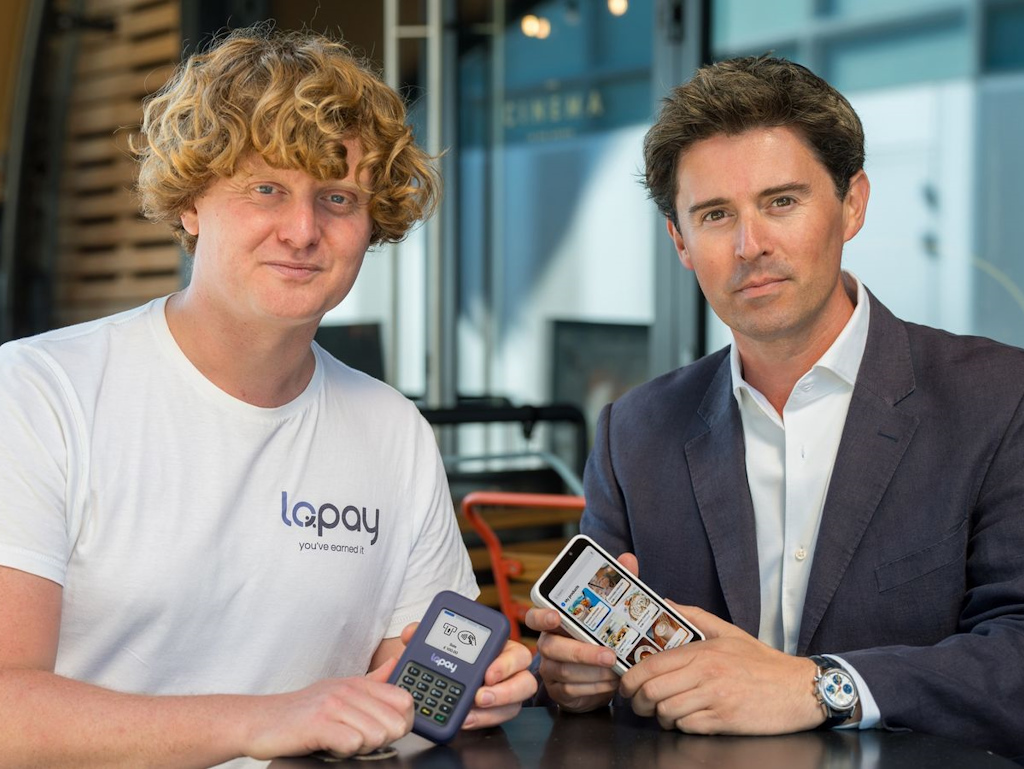
SumUp rival Lopay swipes £6m seed funding in payments battle

Sky News

Mark Kleinman (Sky News)

Lopay founder Richard Carter has received financing from BackedVC and Portage for his payments start-up, which he says is far cheaper to use than more established rivals, Sky News understands.

A British payments start-up which is muscling in on the turf occupied by bigger rivals such as SumUp has secured £6m in backing from a host of prominent venture capitalists.

Sky News understands that Lopay, which was founded by industry executive Richard Carter, has amassed the substantial seed funding from BackedVC, Portage, The Venture Collective and a number of angel investors.

The funding round will be announced publicly on Thursday.

Lopay, which has signed up more than 20,000 small businesses, enables SMEs to take card payments from customers more cheaply than the costs charged by more established payment providers.

In total, Lopay says it has taken nearly 10m customer payments since being founded last year.

It claims its fees are less than a third of those charged by PayPal and half of SumUp and Zettle’s – three of the industry’s biggest names – while giving customers the option of receiving cleared funds in their accounts immediately after each transaction.

The company estimates its pricing has saved merchants more than £1m in aggregate fees since its launch, and anticipates processing another £500m in payments during the next year, saving its customers more than £2.5m.

“Lopay’s mission has resonated with thousands of small businesses and sole traders who are being squeezed simultaneously by high inflation and fragile customer demand,” Mr Carter, a former executive at Ecrebo, a point-of-sale marketing platform, said.

“Against that backdrop, the big beasts of the card payment industry have been poor champions of small business.

“Their high fees mean too many small firms are paying up to 300% more than they need to – or waiting up to three business days – to receive card payments from their customers.”

The £6m fundraising is large by comparison with most seed funding rounds, and comes amid a more challenging environment for early-stage companies to secure new capital.

Juliette Souliman, a principal at Portage, said Lopay was “breaking new ground in the archaic mobile POS payment industry, saving thousands of small businesses time and money as they navigate the post-pandemic business landscape”.

Original Article

Pharmacierge to build 30ft medication-dispensing robot in London

uktech.news

George Simister (uktech.news)

Health tech firm Pharmacierge has announced plans to build a 5,500 sq ft dispensary at its London facility, with plans including a 30ft dispensing robot sending medication between floors via spiralling chutes.

The multi-arm robot will pick out the required medication and load it into chutes that travel up to the top floor of the pharmacy.

Inside the pharmacy, there will be zones designated for biological, refrigerated and controlled medications.

Edward Ungar, CEO of Pharmacierge, said: “While our mPrescribe technology now equally serves clinicians and patients outside of London, we felt very strongly that only a local investment would remain faithful to our brand values, our roots and the private medical community who have supported us through thick and thin.”

Pharmacierge told UKTN it expects the London facility and robotic arm to be up and running early next year.

The dispensary will be situated on Wimpole Street in Marylebone, London. With its nearby Harley Street location, the company will now operate 8,000 sqft of space.

According to Pharmacierge, it deals with more than 4,500 GP and consultants. Over 90% of the practices say it prescription software saves them “5-15 mins per prescription”.

Backers of the health tech business include Cazoo’s founder Alex Chesterman, who invested in its £1.25m round in 2021. Its most recent funding round came in April this year, when it scooped £2.4m, primarily from the doctors that use its service.

Original Article