Eli Lilly buys psychedelic drugs company AtaiBeckley for $3.8bn

thetimes.com

Alex Ralph (thetimes.com)

Company was spun out of the Beckley Foundation which has its origins in an aristocrat’s Tudor hunting lodge

A psychedelic drugs company whose lead asset is based on a chemical found in the Sonoran Desert toad, and whose origins lie with an Oxfordshire aristocrat, has been acquired by Eli Lilly for up to $3.8 billion.

AtaiBeckley, listed on New York’s Nasdaq, has agreed a sale to the US pharma group a few months after the market was lifted by President Trump’s executive order directing regulators to speed up reviews of psychedelic therapies and to increase federal research funding.

The company was created a year ago through the $390 million all-share combination between Atai Life Sciences and Beckley Psytech. The latter was spun out of the Beckley Foundation, an institute founded in 1998 to research the effects of psychoactive drugs that was started by the late Amanda Feilding, the Countess of Wemyss and March. It was registered at Beckley Park, the family home, a Tudor hunting lodge near Oxford.

Cosmo Feilding Mellen, 41, her son, who was chief executive of Beckley Psytech, remained a shareholder in AtaiBeckley following last year’s combination, holding a stake of about 2 per cent, according to FactSet data. Lilly’s takeover values his stake at more than $50 million.

Early investors in Beckley Psytech, which was incorporated in 2018, included Jim Mellon, the businessman and investor, and Richard Reed, a co-founder of Innocent Drinks.

Original Article

Tolemy Bio lands €1.4M to power AI-driven cell biology

tech.eu

Tamara Djurickovic (tech.eu)

With new funding, Tolemy Bio plans to advance its AI-enabled cell biology platform designed to help biopharma teams better interpret, optimise, and manage experimental research workflows.

Cambridge-based biotech startup Tolemy Bio has raised €1.4 million in pre-seed funding to advance its AI-enabled technology for cell biology research and biopharma development. The round was led by Norrsken Evolve, with participation from Big Sur Ventures, JME Ventures, Masia, and a new UK-based stealth fund.

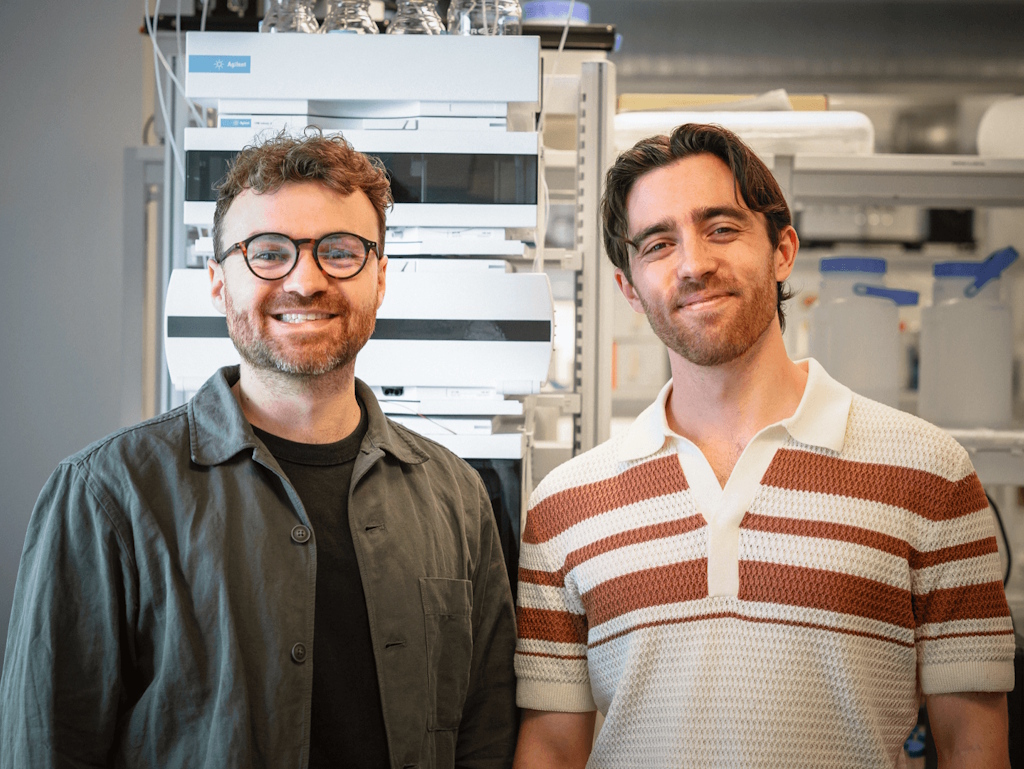
Founded by Alex Ward and Caelan Anderson, Tolemy Bio is developing Orbit, a system designed to help researchers better understand, interpret, and optimise living cells used in modern therapies and drug development.

The company is focused on a longstanding challenge within biopharma and cell biology: while living cells are central to areas such as cell therapies and therapeutic proteins, experimental workflows remain highly manual and fragmented.

Research data is often spread across spreadsheets, lab equipment, notebooks, and disconnected systems, limiting the ability of teams to effectively apply AI tools to drug development and manufacturing processes.

Orbit is designed to bring these fragmented workflows into a single AI-native environment. The system connects existing laboratory tools and experimental data sources, while also incorporating virtual cell models and AI research agents intended to help scientists analyse cellular behaviour and guide experimental decision-making.

Alex Ward, co-founder and CEO of Tolemy Bio, said the company was founded to address the difficulties researchers face in interpreting and reproducing complex cell biology experiments.

Our platform, Orbit, is designed to connect experimental data with AI models,” said Ward. “Our goal is to make complex cell biology easier to interpret, optimise, and apply to real therapeutic development.

The newly raised funding will be used to expand Tolemy Bio’s data generation, machine learning, and engineering capabilities, continue development of Orbit, and support early customer and partner deployments. While headquartered in Cambridge, the company says much of its operational activity will continue from Barcelona.

Tolemy Bio’s long-term goal is to build a virtual-cell platform that helps biopharma companies move beyond trial-and-error experimentation towards more precise and data-driven approaches to understanding and controlling living cells.

Original Article

Nila raises $2.4M pre-seed round to simplify cross-border senior care for immigrants

techfundingnews.com

Sofia Chesnokova (TFN)

Immigrants typically spend upwards of eight hours a week and more than $5,000 annually coordinating and funding care for elderly relatives from afar, entailing frequent costly trips home. London-based healthtech startup Nila aims to alleviate this burden by offering a frictionless, transparent, and technology-enabled way to manage senior care remotely.

Today, Nila has closed an oversubscribed $2.4 million pre-seed funding round led by LocalGlobe, with backing from Redbus Ventures and angel investors connected to Revolut, Wise, and Nala.

The capital will fuel the growth of Nila’s AI-driven platform designed to help immigrants manage healthcare and caregiving needs for elderly relatives overseas, with an initial focus on India and plans to expand across Asia, including the Philippines.

Since launch, Nila has facilitated over 3,000 care requests in more than 10 Indian cities, such as Mumbai, Delhi, Bengaluru, Chennai, Pune, and Kolkata, notably maintaining zero customer churn.

Managing senior care from afar

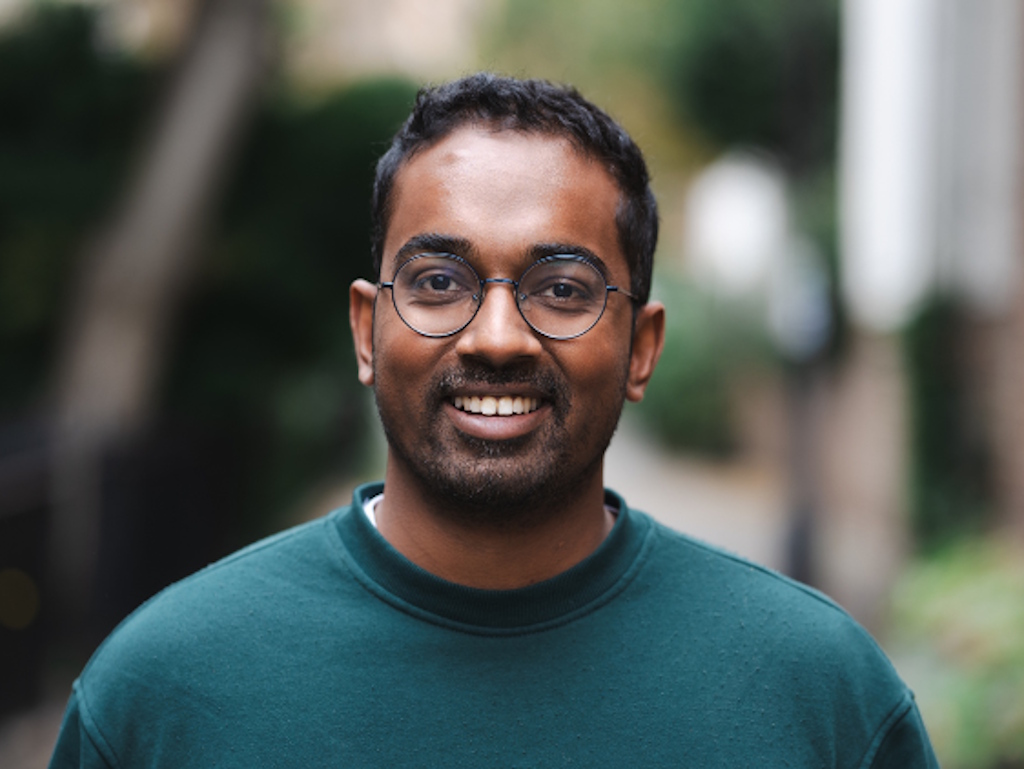
Founded less than a year ago by CEO Anthony Jacob, a remittance payments expert formerly at Taptap Send, Nila emerged from Founders Factory’s Aviva fintech venture studio. Jacob’s vision was shaped by personal difficulties coordinating care for his elderly parents in Sri Lanka during the pandemic.

Jacob told TFN, “It started from a deeply personal place, seeing how difficult it was for my sister and me to coordinate care for our parents during COVID while living in a different country from them. We realised millions of immigrants face the same challenge, and there was no trusted, tech-enabled solution bridging that gap.”

He added, “We’re proud to share that over 70% of our team identify as a minority or an immigrant. Our distributed team spans the UK, the US and multiple Indian cities, reflecting both our global customer base and local care delivery.”

Behind Nila’s AI-powered care coordination platform

At the heart of Nila’s solution is an AI-powered care coordination platform combined with proprietary cross-border payment systems and a network of “Nila Certified” carers. These in-house certified professionals undergo specialised training in geriatric care and safeguarding, enabling them to provide end-to-end services, including managing home visits, medication tracking, medical appointments, and seamless payment for medical expenses on behalf of families abroad.

Jacob said, “We face an ageing population of a huge proportion. The knock-on effect is increased elder dependency on younger generations, often young professionals exploring careers abroad who have to handle care arrangements remotely.

At Nila, we are the bridge to that cross-border high-quality care that is smarter, more efficient and keeps families far away informed of every step. Today’s fundraiser is an exciting opportunity to take the next step in Nila’s growth – delivering personalised senior care at scale.”

Julia Hawkins, partner at LocalGlobe, added, “Anyone living abroad will know how stressful, worrying and costly it is to care for loved ones from afar. Nila is fundamentally transforming that experience by tackling the toughest challenges – from finding trusted carers to managing clunky payments and getting real visibility into day-to-day care. Nila can’t replace being there in person, but it’s already proving that it’s the next best thing: giving families peace of mind as they navigate complex health needs and responsibilities.”

While the senior care and eldertech market includes competitors like Papa, Homage, and Meiko, Nila stands out with its focus on immigrants’ unique challenges, particularly cross-border payments and caregiver certification in emerging markets.

Customers in the UK and US pay around $100 a month, giving their loved ones continuous support and companionship through local health and telehealth partnerships.

What’s next?

With rapid expansion planned in Indian metros over the next 12 to 18 months and broader Asian market entry on the horizon, Nila is poised to tap into the $130 billion global remittance flow, a significant portion spent on healthcare for elderly family members.

Jacob concluded, “We aim to become the most trusted eldercare platform for global families, expanding across India and into new diaspora markets in the future. Over the next three years, we’ll deepen our tech stack, scale operations, and build Nila into the default care partner for the diaspora.”

Original Article
Cleo CEO teases IPO after AI fintech doubles revenue

Sifted

Tom Matsuda (Sifted)

The company’s annual results reveal a previously undisclosed fundraise from existing investors

The CEO of AI-powered fintech Cleo has teased a potential IPO, after doubling year-on-year revenue, according to results covering 2024.

Founded in 2016 by Barney Hussey-Yeo, Cleo is most known for its AI assistant, which encourages users to build better financial habits through its characterful chatbot.

Announcing the results on LinkedIn, CEO and founder Barney Hussey-Yeo claimed Cleo will soon reach $500m annual recurring revenue while floating the idea of a London or NYC public listing.

In financial results covering the year-end of 2024, Cleo revealed details of a previously undisclosed funding round worth $38.8m, backed by existing investors. The fintech has previously raised over $130m in funding from investors including Balderton Capital, LocalGlobe and EQT Ventures.

Cleo reported a pre-tax loss of $769k compared to a $16.1m the year prior, as revenue increased from $65.9m to $135.7m. Cleo makes money by offering tiered subscription plans that unlock a credit-building card and cash advances alongside extra features for its AI assistant, depending on its plan.

The uptick in revenue came as a result of a 50% increase in subscription revenue and a close to tripling in transaction fees — payment interchange fees on purchases with its card and also fees from its cash advance product.

The results also disclosed a previously unannounced $38.8m funding round in March this year through the issuance of convertible loan notes to Cleo’s existing investors. And while the AI fintech is now nearing full-year pre-tax profitability, Cleo has also encountered challenges in the past year.

In March this year, the company, which is incorporated in the UK but serves customers in the US, paid $17m to settle the Federal Trade Commission’s allegations it had deceived consumers on the speed and amount customers could receive from its cash advance product.

Original Article

Pharmacierge recognised as Healthcare Technology Provider of the Year at the HealthInvestor Awards 2025

healthinvestorawards.com

Pharmacierge is delighted to have been named Healthcare Technology Provider of the Year at the HealthInvestor Awards 2025.

This recognition reflects the company’s dedication to building technology and services shaped around the needs of private practitioners and their patients.

Built in collaboration with clinicians, Pharmacierge has striven to become UK’s preferred ePrescribing and delivery pharmacy for the private pathway. Now trusted by over 4,500 consultants and GPs, Pharmacierge dispenses and delivers thousands of prescriptions each week to patients across the country.

“Our platform was built in direct response to what private clinicians told us they needed,” said Edward Ungar, Pharmacierge CEO and co-founder. “They wanted a pharmacy partner who could provide the speed and ease of digital prescribing, with the safety, responsiveness, and professionalism of a traditional pharmacy. That combination has always been at the core of what we do,” adds co-founder and CFO, Robert Ungar.

At the centre of Pharmacierge’s operations is a 5,500 sqft state-of-the-art dispensary in London’s Harley Street Health District. Its purpose-design houses one of the largest private formularies in the UK, including controlled drugs, specialist imports, injectables, and cold-chain items. Experienced pharmacy staff work alongside the latest robotics to dispense and dispatch medications with speed and accuracy. All patient-facing and clinician support teams are London-based, giving users direct access to real people who understand their needs.

Prescriptions can be delivered the same-day within London and next-day nationwide. Deliveries are tracked and signed for, offering transparency at every step for practice staff. These logistical capabilities, combined with empathetic support, have made Pharmacierge an essential partner for clinicians who value reliability and specialised expertise.

A key driver of Pharmacierge’s growth has been its proprietary apps, especially mPrescribe®, the UK’s first mobile app for private electronic prescribing. This free app allows prescriptions to be issued securely from a clinician’s mobile in seconds. Its desktop counterpart offers additional flexibility for administrative workflows within private practices. Both platforms were designed with clinician input to ensure they are intuitive, compliant, and seamlessly integrated into daily routines.

Pharmacierge remains singularly focused on making eprescribing simpler, safer, and more convenient.

Original Article

We’re measuring AI all wrong—and missing what matters most

Fortune

By Fernanda Dobal

Fernanda Dobal is product director for AI and chat at Cleo.

There’s a peculiar irony in how we evaluate artificial intelligence: We’ve created systems to mimic and enhance human capabilities, yet we measure their success using metrics that capture everything except what makes them truly valuable to humans.

The tech industry’s dashboards overflow with impressive numbers on AI: processing speeds, parameter counts, benchmark scores, user growth rates. Silicon Valley’s greatest minds tweak algorithms endlessly to nudge these metrics higher. But in this maze of measurements, we’ve lost sight of a fundamental truth: The most sophisticated AI in the world is worthless if it doesn’t meaningfully improve human lives.

Consider the story of early search engines. Before Google, companies competed fiercely on the sheer number of web pages indexed. Yet Google prevailed not because it had the biggest database, but because it understood something deeper about human behavior—that relevance and trustworthiness matter more than raw quantity.

AI that builds trust

Today’s AI landscape feels remarkably similar, with companies racing to build bigger models while potentially missing the more nuanced elements of human-centered design that actually drive adoption and impact.

The path to better AI evaluation begins with trust. Emerging research demonstrates that users engage more deeply and persistently with AI systems that clearly explain their reasoning, even when those systems occasionally falter. This makes intuitive sense—trust, whether in technology or humans, grows from transparency and reliability rather than pure performance metrics.

Yet trust is merely the foundation. The most effective AI systems forge genuine emotional connections with users by demonstrating true understanding of human psychology. The research reveals a compelling pattern: When AI systems adapt to users’ psychological needs rather than simply executing tasks, they become integral parts of people’s daily lives. This isn’t about programming superficial friendliness—it’s about creating systems that genuinely comprehend and respond to the human experience.

Trust matters more than technical prowess when it comes to AI adoption. A groundbreaking AI chatbot study of nearly 1,100 consumers found that people are willing to forgive service failures and maintain brand loyalty not based on how quickly an AI resolves their problem, but on whether they trust the system trying to help them.

AI that gets you

The researchers discovered three key elements that build this trust: First, the AI needs to demonstrate a genuine ability to understand and address the issue. Second, it needs to show benevolence—a sincere desire to help. Third, it must maintain integrity through consistent, honest interactions. When AI chatbots embodied these qualities, customers were significantly more likely to forgive service problems and less likely to complain to others about their experience.

How do you make an AI system trustworthy? The study found that simple things make a big difference: anthropomorphizing the AI, programming it to express empathy through its responses (“I understand how frustrating this must be”), and being transparent about data privacy. In one telling example, a customer dealing with a delayed delivery was more likely to remain loyal when a chatbot named Russell acknowledged their frustration and clearly explained both the problem and solution, compared to an unnamed bot that just stated facts.

This insight challenges the common assumption that AI just needs to be fast and accurate. In health care, financial services, and customer support, the most successful generative AI systems aren’t necessarily the most sophisticated —they’re the ones that build genuine rapport with users. They take time to explain their reasoning, acknowledge concerns, and demonstrate consistent value for the user’s needs.

And yet traditional metrics don’t always capture these crucial dimensions of performance. We need frameworks that evaluate AI systems not just on their technical proficiency, but on their ability to create psychological safety, build genuine rapport, and most importantly, help users achieve their goals.

New AI metrics

At Cleo, where we’re focused on improving financial health through an AI assistant, we’re exploring these new measurements. This might mean measuring factors like user trust and the depth and quality of user engagement, as well as looking at entire conversational journeys. It’s important for us to understand if Cleo, our AI financial assistant, can help a user with what they are trying to achieve with any given interaction.

A more nuanced evaluation framework doesn’t mean abandoning performance metrics—they remain vital indicators of commercial and technical success. But they need to be balanced with deeper measures of human impact. That’s not always easy. One of the challenges with these metrics is their subjectivity. That means reasonable humans can disagree on what good looks like. Still, they are worth pursuing.

As AI becomes more deeply woven into the fabric of daily life, the companies that understand this shift will be the ones that succeed. The metrics that got us here won’t be sufficient for where we’re going. It’s time to start measuring what truly matters: not just how well AI performs, but how well it helps humans thrive.

Original Article

Financial wellbeing platform Mintago lands £6m funding boost

Sky News

Mark Kleinman (Sky News)

The company, which counts Lucky Saint and Avis among its users, has finalised a Series A fundraising jointly led by Guinness Ventures, Sky News understands.

A financial wellbeing platform which counts the alcohol-free beer producer Lucky Saint among its clients has landed a £6m funding injection from a syndicate of well-known investors.

Sky News understands that Mintago, which was founded in 2019, will announce in the coming days that Guinness Ventures has jointly led the Series A round alongside Seed X Liechtenstein and Social Impact Enterprises.

Mintago, which also counts car rental firm Avis and Northumbrian Police among its customers, aims to help employees save and manage their money more effectively.

A number of the start-up’s current investors, Love Ventures and Truesight Ventures, are also understood to have reinvested as part of the fundraising.

The company was set up by Chieu Cao and Daniel Conti, and claims to offer more salary sacrifice schemes than any other UK provider.

It also provides independent financial advice, a service for finding lost pension pots, retail discounts and GP services.

“We realised that organisations are crying out for the same help we provide their staff,” Mr Conti said.

“The benefits of providing that support impact everyone.

“When a company improves their salary sacrifice benefits engagement, they can save thousands in National Insurance Contributions, but their employees save too, easing the strain on their finances.”

The new capital will be used to develop additional products using artificial intelligence, according to the company.

“Mintago is enabling its customers to become truly people-centric organisations by giving them the tools to support their employees’ financial wellbeing,” Mathias Jaeggi, a partner at Seed X Liechtenstein, said.

Original Article

Cloud Capital unveil results of latest funding round

UKTECH.NEWS

Jessica Nangle (uktech.news)

The funding was backed from a series of venture capitalists

New start-up Cloud Capital unveiled it has raised $7.7m (£5.8m) in a latest funding round.

The funding was backed from a series of venture capitalists, including Connect Ventures, Backed Ventures and Middlegame Ventures.

Cloud Capital plans to use the capital to redefine how finance teams manage cloud spend by building the first fintech platform for the cloud; enabling companies to forecast usage, unlock savings and reduce financial risk from long-term cloud commitments.

The company is founded by Edward Barrow, Spencer Pingry and Zack Liscio, a trio who have collectively managed more than $500m (£376m) in cloud spend.

“We believe cloud infrastructure is the largest broken market in tech,” said Barrow. “We have been in the driving seat; we have built the forecasts and we have lived the pain.

“We built Cloud Capital to give CFOs the same level of control over cloud that they have across the rest of the P&L.”

For CFOs, cloud is now the second-largest cost after headcount – typically 6% to 12% of revenue in SaaS businesses and as high as 30% to 40% in AI-native companies according to latest figures.

“Cloud has always been a massive cost center but, with AI workloads driving usage through the roof, it’s become the fastest growing and least controlled line item on the P&L,” Liscio added.

Pingry explained how Cloud Capital is shifting the dynamic. “Other tools help engineers save money. We help CFOs manage risk,” he said. “We are building financial infrastructure – a control layer for cloud that gives companies a new way to finance and optimise cloud like any other major investment.”

Cloud Capital raised an initial $2.3 million pre-seed round led by Connect Ventures alongside a number of fintech angels.

Shortly thereafter, the firm raised a $5.4 million seed round led by Backed Ventures and Middlegame Ventures, with additional backing from DFF Ventures.

Original Article

Unilever acquires personal care brand Wild

Unilever

Unilever today announced it has acquired the personal care brand Wild. This marks another step in the optimisation of Unilever’s portfolio towards premium and high growth spaces as part of the Growth Action Plan 2030.

Launched in the UK in 2020, Wild is a digitally native brand which has built a loyal consumer base through its direct-to-consumer and retail model with desirable, natural and refillable products. The brand’s premium deodorants, lip balms, bodywashes and handwashes are powered by plant-based ingredients and packaged in unique plastic-free materials.

Wild’s rapid growth, distinctive premium offering across personal care categories, and position as the UK’s No. 1 refillable deodorant brand, make it a strategic addition to Unilever’s existing portfolio of Personal Care brands.

Fabian Garcia, President of Unilever Personal Care, said: “We are thrilled to welcome Wild into the Unilever family. The brand’s innovative approach to formulations and packaging, and social-first marketing, has made Wild an unmissably superior brand, and a perfect complement to our Personal Care portfolio. Charlie, Freddy and the team have put consumers at the heart of the brand which is a testament to its success.”

Wild Co-Founder Charlie Bowes-Lyon said: “Joining Unilever marks an exciting new chapter for Wild. Our mission to remove single-use plastic from the bathroom with desirable, innovative personal care products will be hugely strengthened by leveraging Unilever’s expertise, scale and reach to further grow the brand and bring our vision to more consumers.”

Wild is distributed through direct-to-consumer, digital commerce and retail channels, primarily in the UK, Europe, and the US. The terms of the deal were not disclosed.

Original Article

Unilever buys refillable personal care brand Wild for undisclosed sum

morningstar.co.uk

Morningstar
(Alliance News) – Consumer goods firm Unilever PLC has bought upmarket refillable personal care brand Wild to add to its stable of household names.

The London-based Dove soap to Marmite group acquired Wild for an undisclosed sum but reports said the deal could be worth up to GBP230 million.

Wild – backed by the founders of Innocent Drinks – makes premium deodorants, lip balms, bodywashes and handwashes using plant-based ingredients, with refillable, plastic-free packaging.

Fabian Garcia, president of Unilever Personal Care, said: “The brand’s innovative approach to formulations and packaging, and social-first marketing, has made Wild an unmissably superior brand and a perfect complement to our personal care portfolio.”

He added that the group has “put consumers at the heart of the brand, which is a testament to its success”.

Wild Co-Founder Charlie Bowes-Lyon said: “Joining Unilever marks an exciting new chapter for Wild. Our mission to remove single-use plastic from the bathroom with desirable, innovative personal care products will be hugely strengthened by leveraging Unilever’s expertise, scale and reach to further grow the brand and bring our vision to more consumers.”

Wild was launched in 2020 by Bowes-Lyon and Freddy Ward with a mission to help remove single-use plastic from bathrooms.

The group is thought to have raised around GBP10 million from external investors, including Jamjar Ventures, the investment vehicle of Innocent Drinks’ founders, Redbus Ventures and Slingshot Ventures.

For Unilever, it comes as the group is undergoing a major turnaround plan, which involves 7,500 previously announced job cuts, as well as moves to trim the number of brands in its food division and focus more attention on its biggest sellers.

It is also offloading its Ben & Jerry’s and Wall’s ice cream division, announcing plans earlier this month to spin it off with a stock market listing in Amsterdam, alongside additional listings in London and New York.

Former chief financial officer Fernando Fernandez last month took on the top job at Unilever, replacing ex-chief executive Hein Schumacher, who left the role “by mutual agreement” after less than two years at the helm.

Fernandez was also previously president of beauty and wellbeing at Unilever.

Original Article